
Pot Roast with Vegetables - An American tradition
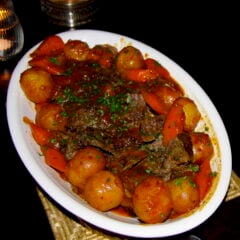
Pot Roast with Vegetables is one of those timeless dinners that fill the kitchen with the most wonderful aroma and bring everyone to the table.
Ingredients
- 1 tablespoon vegetable oil
- 4 pounds chuck roast, boneless, rolled and tided chuck roast
- 2 yellow onion, chopped fine
- 4 garlic, chooped
- ¾ cup canned crushed tomatoes
- ¼ cup red wine vinegar
- 1 tablespoon brown sugar, firmly packed
- 1 bay leaf
- 1 pound carrot washed, cut diagonally into 1 inch slices, trimmed,
- 1½ lbs red potatoes, peeled
- 2 cups froen baby peas
- 1½ tablespoons cornstarch, dissolved with 1 1/2 tablespoon water
- flat-leaf parsley, minced
Instructions
- Preheat the oven to 350°. In a large heavy flameproof casserole heat the oil over moderately high heat until it is hot but not smoking and in it brown the beef, patted dry and seasoned with salt and pepper on all sides.
- Transfer the beef to a plate, add the onions and the garlic to the casserole, and cook the mixture over moderate heat, stirring, until the onions are golden. Stir in the tomatoes, the vinegar, the sugar, the bay leaf, and 2 ½ cups water, bring the mixture to a boil, and add the beef. Braise the beef, covered, in the oven for 1 hour, add the carrots, and braise the mixture covered for 30 minutes.
- Add the potatoes and peas and braise the mixture, covered, for 30 minutes, or until the beef and the vegetables are tender
- Transfer the beef with slotted spoons to a cutting board and let it stand for 10 minutes. Skim the fat from the top of the cooking mixture to a boil. Stir the cornstarch mixture and add enough of it to the boiling cooking mixture, stirring to thicken the gravy to the desired consistency.
- Simmer the gravy mixture, stirring occasionally for 2 minutes, season it with salt and pepper, and discard the bay leaf. Slice the beef, arrange it on a heated platter, and transfer the vegetables with a slotted spoon to the platter. Spoon some of the gravy over the beef and serve the remaining gravy on the side. Garnish with the parsley.
Notes
Pat the beef dry before searing: A dry surface helps the chuck roast develop a deep, flavorful crust.
Do not rush the browning: Take the time to brown the roast thoroughly on all sides. This is where so much of the flavor begins.
Use a heavy Dutch oven: It holds heat evenly and is ideal for long, slow braising.
Keep the lid on: Trapping the steam helps keep the beef moist and tender as it cooks.
Add the vegetables in stages: Carrots can handle longer cooking, while potatoes and peas should be added later so they do not become too soft.
Check for tenderness, not just time: The roast is ready when a fork slides in easily and the meat feels tender.
Let the meat rest before slicing: Give it about 10 minutes so the juices can settle back into the roast.
Skim excess fat from the gravy: This keeps the sauce rich without making it feel heavy.
Add the cornstarch slurry gradually, stirring it in a little at a time until the gravy reaches your desired consistency.
Make it ahead when you can: Pot roast is often even more flavorful the next day after the ingredients have had time to mingle.
Nutrition
Calories: 707kcal | Carbohydrates: 29g | Protein: 64g | Fat: 37g | Saturated Fat: 17g | Cholesterol: 208mg | Sodium: 262mg | Potassium: 1695mg | Fiber: 6g | Sugar: 6g | Vitamin A: 565IU | Vitamin C: 38.1mg | Calcium: 111mg | Iron: 10.9mg
Giangi's Kitchen provides nutritional information, but these figures should be considered estimates, as a registered dietician does not calculate them.