
Pork Chops with Beer and Mustard Gravy
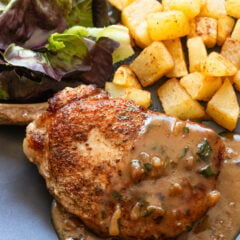
These pork chops with beer and mustard gravy are seared until golden, finished in the oven, and served with a savory-sweet pan sauce made with amber ale, French mustard, maple syrup, shallots, and tarragon.
Ingredients
- 4 pork chops, 6-ounces each
- 2 tablespoons olive oil
- 2 medium shallots, minced
- 1 teaspoon unbleached all purpose flour
- 1 cup amber ale beer
- ½ cup sodium free chicken stock
- 2 tablespoons maple syrup
- ½ teaspoon fresh tarragon, chopped
- 1 tablespoon Dijon French mustard
- 2 tablespoons unsalted butter
- salt and pepper
Instructions
- Preheat the oven to 325°.
- Heat the oil in a heavy-duty 12” skillet. Swirl to coat the bottom of the pan with the shimmering hot oil. Season the pork chops all over with salt and pepper, then cook them in the skillet over medium heat until golden. Use a splatter screen to prevent oil splatters. About 4 to 5 minutes per side.
- Transfer the pork chops to an ovenproof dish and place in the oven uncovered.
- Pour off all but 1 tablespoon of the fat from the skillet. Add the shallots and sauté over medium heat until softened, about 2 minutes.
- Stir in the flour until combined.
- Stir in the beer, chicken broth, maple syrup, and tarragon. Increase the heat to high and bring to a boil, scraping up any browned bits from the skillet with a wooden spoon.
- Simmer vigorously until reduced to about 1 cup, about 3 minutes. Remove from the heat and whisk in the mustard and the butter.
- Season with salt and pepper. Serve the sauce over the pork chops
Notes
- Season the meat on parchment paper so you can easily catch any salt and pepper that falls on it by pressing it on the edges.
- Score the fat band of the pork chops to prevent them from curling up when cooking.
- To obtain a rich sauce, use a good amber pale ale, which will give it the depth it craves.
- Swirl the butter once your skillet is off the burner. You want the butter to melt and emulsify into the sauce, not just melt. This technique allows you to create a smooth, irresistible sauce.
- If you are not used to the taste of tarragon, which is more pronounced as an herb, start with 1/4 teaspoon, taste, and add as you go.
- Use a meat thermometer rather than relying only on cooking time. Pork chop thickness varies, so cook until the thickest part reaches 145°F. Consequently, be very cautious when removing them from the oven, as the pan will be very hot.
Nutrition
Calories: 388kcal | Carbohydrates: 12g | Protein: 30g | Fat: 22g | Saturated Fat: 8g | Polyunsaturated Fat: 2g | Monounsaturated Fat: 11g | Trans Fat: 0.3g | Cholesterol: 105mg | Sodium: 201mg | Potassium: 590mg | Fiber: 0.4g | Sugar: 7g | Vitamin A: 191IU | Vitamin C: 1mg | Calcium: 32mg | Iron: 1mg
Giangi's Kitchen provides nutritional information, but these figures should be considered estimates, as a registered dietician does not calculate them.