
Watercress Pesto with Linguine

Sharp and peppery, the watercress is a great way to enhance any delicious pasta dish. Taking the classic pasta with pesto up a notch.
Ingredients
- 1 bunch watercress
- 1 garlic clove
- 4 tablespoons parmesan cheese , + shavings
- ½ cup pine nuts
- ½ cup olive oil
- 1 pound linguine pasta
- 4 tablespoons heavy cream
- 1 tablespoon butter
Instructions
- Rinse the watercress and remove as many of you can of the thick stems.
- In a food processor, add the watercress, garlic, parmesan cheese, and pine nuts and chop until it becomes a puree. Slowly add the olive oil while the motor is running the food processor. You should have a creamy-thick green sauce
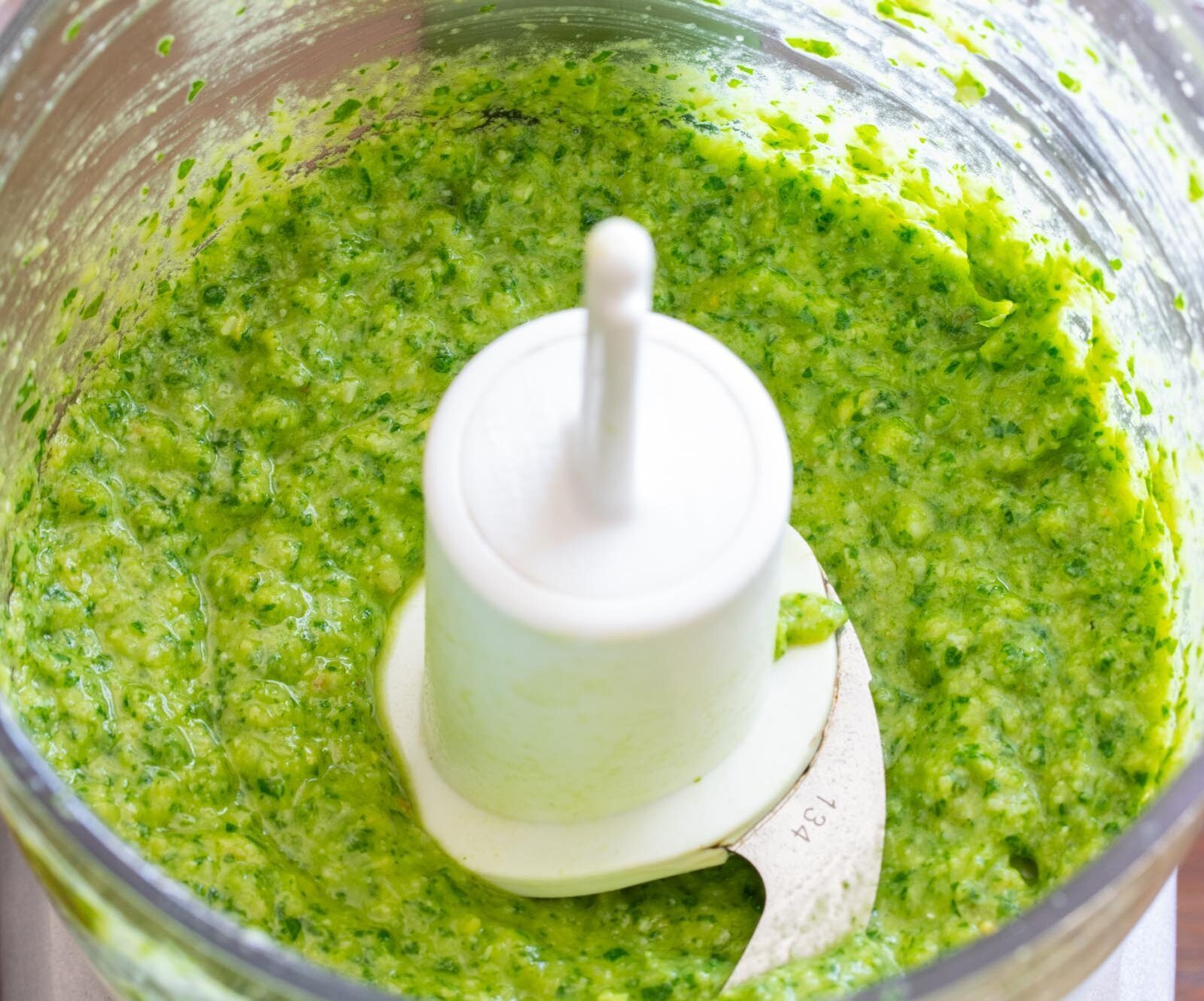
- Meanwhile, cook the pasta in a large, salted pot and cook it to al dente, a couple of minutes before recommended manufacturer cooking time.
- Save 1 cup of the cooking water. Drain the pasta and put it back into the cooking pot.
- Add the butter and heavy cream. Mix well and once the butter is melted, add some of the watercress pesto. Mix well and serve on a pasta plate.
- Add a spoonful of watercress pesto to each dish and top with parmesan cheese shavings.

Nutrition
Calories: 870kcal | Carbohydrates: 88g | Protein: 20g | Fat: 50g | Saturated Fat: 11g | Polyunsaturated Fat: 10g | Monounsaturated Fat: 26g | Trans Fat: 0.1g | Cholesterol: 28mg | Sodium: 117mg | Potassium: 397mg | Fiber: 4g | Sugar: 4g | Vitamin A: 551IU | Vitamin C: 3mg | Calcium: 106mg | Iron: 3mg
Giangi's Kitchen provides nutritional information, but these figures should be considered estimates, as a registered dietician does not calculate them.