
Eggplant Parmigiana
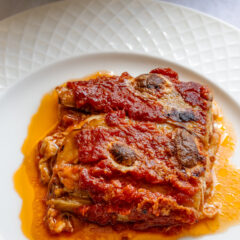
Eggplant Parmigiana, or Parmigiana di Melanzane, is one of those comforting Italian dishes that brings everyone to the table.
Ingredients
- 2 pounds of eggplant
- 1 pound San Marzano tomatoes, peeled
- basil, few leaves
- 2 garlic cloves, peeled, hard end core removed.
- 1 pound fresh mozzarella, sliced
- 1 cup Parmesan cheese, finely grated
- vegetable cooking oil, as needed for frying
- Salt, to taste
- pepper, to taste
Instructions
- Clean the eggplants and remove the skin and the top core. Cut the eggplant lengthwise, keeping it ½ inch thick.
- Place the cut slices on a cutting board and salt each layer. Place a cutting board over the eggplant slices and make sure it is over the sink, slightly tilted so all the bitter juice drains off. Let it rest for about 30 minutes.
- While the eggplants are resting, start the tomato sauce. Peel the garlic and place in a pan with a couple of tablespoons of oil. Cook the garlic until golden and then toss.
- Add the tomatoes to the pan. If using whole peeled tomatoes, give them a few turns in the blender. Add salt, pepper, and basil. Cook at low heat for 5 minutes and then remove the basil.
- When the eggplant is ready to fry, dry it with paper towels and fry 3-4 slices at a time in plenty of hot oil (not smoking, or they will burn). When golden, remove and place on paper towels over a cooling rack placed over a cookie sheet. 2 to 3 minutes per side.
- Preheat the oven to 400 F
- In an oven-proof dish, add a layer of tomato sauce, then cover with eggplant slices placed side by side. Cover the eggplant with tomato sauce, then a rich layer of parmesan cheese. On top of the parmesan, add thinly sliced mozzarella. Add a small amount of salt over it.
- Repeat the above steps and end with a layer of the eggplant, which you will cover with tomato sauce
- Add Parmesan cheese. If there is mozzarella left, cut it into small pieces and add it on top.
- Cook the parmigiana in the oven at 400 for 35 minutes. The top crust should be golden and the cheese stringy when cutting.
- Let it rest for 10 minutes before cutting and serving.
Another easy method if you do not want to use a cutting board is to place your slices in a large colander, add salt between each layer of eggplant, and press down with a heavy weight. Place it in the sink and let the excess moisture run off. Rinse, pat dry, and continue with the recipe.
Notes
- Make sure you remove the outer rind of the eggplant and let it rest pressed with the salt to remove the acidity.
- Letting the eggplant slices sweat out the bitterness, pull out extra water, and stop from soaking up too much oil when cooking.
- Also, slice the eggplant lengthwise instead of in rounds. It will cook better and more evenly.
- To test if the oil is hot, add a tiny piece of eggplant, or anything you may be cooking, into the hot skillet with the oil. Once it starts to bubble, your oil is hot, and you can proceed with the recipe.
- When cooking with hot oil, always slide your ingredients into the pan, in this case the slices of eggplant, gently from the side. This prevents splatter and the risk of burning yourself.
- Use cooking tongs with a long handle to turn your eggplant when frying.
- Remove the eggplant slices from the hot oil skillet and place them over a paper towel-lined cooling rack over a cookie sheet to drain any excess oil. This will allow the eggplant to drain any excess oil and not be soggy.
- Once out of the oven, let it rest, as it will be scorching. This dish can also be prepared a few hours, or even the night before.
Nutrition
Calories: 356kcal | Carbohydrates: 17g | Protein: 26g | Fat: 22g | Saturated Fat: 13g | Polyunsaturated Fat: 1g | Monounsaturated Fat: 6g | Cholesterol: 71mg | Sodium: 844mg | Potassium: 645mg | Fiber: 6g | Sugar: 10g | Vitamin A: 839IU | Vitamin C: 11mg | Calcium: 620mg | Iron: 2mg
Giangi's Kitchen provides nutritional information, but these figures should be considered estimates, as a registered dietician does not calculate them.