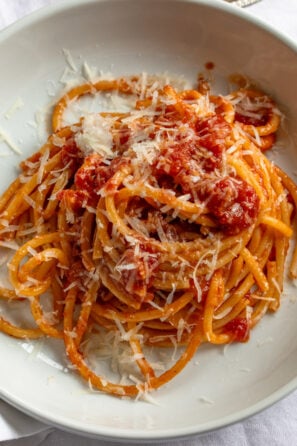
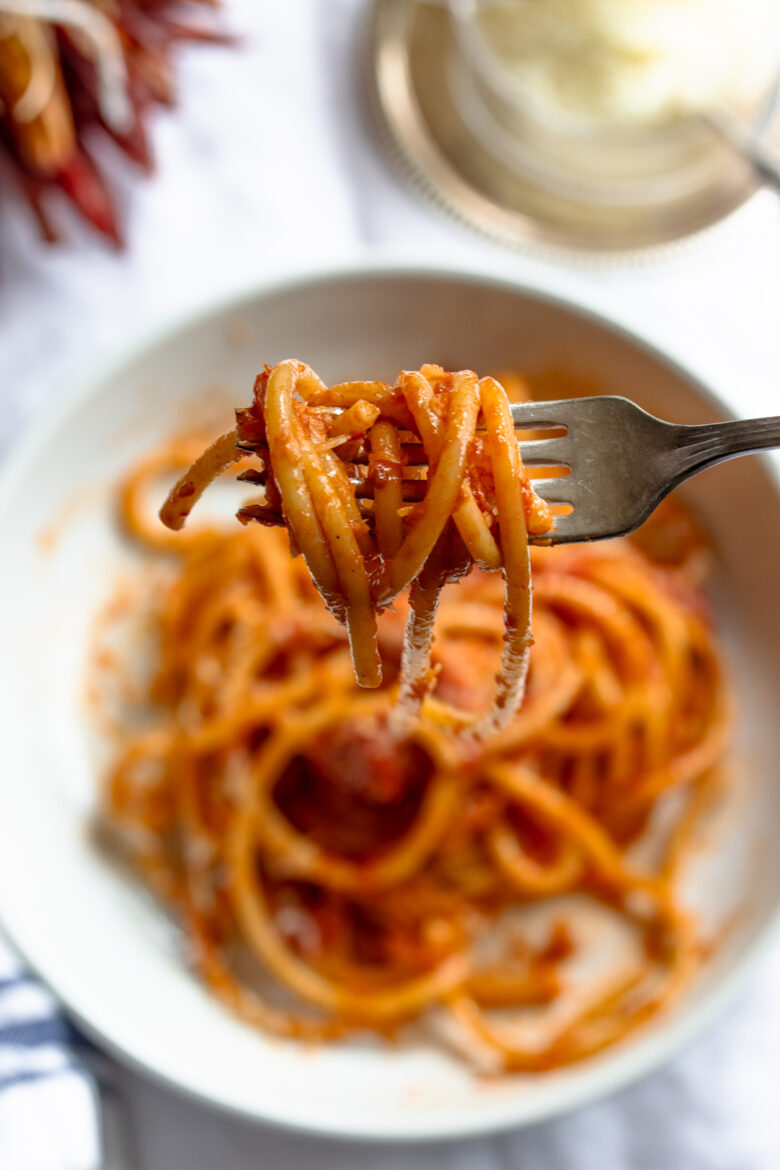
Bucatini all’ Amatriciana is probably the most famous pasta of central Italy. Onions, pancetta, tomato, and strong pecorino romano cheese cling to perfectly cooked bucatini pasta.
A classic Roman pasta dish, amatriciana requires only a handful of ingredients and comes together quickly.
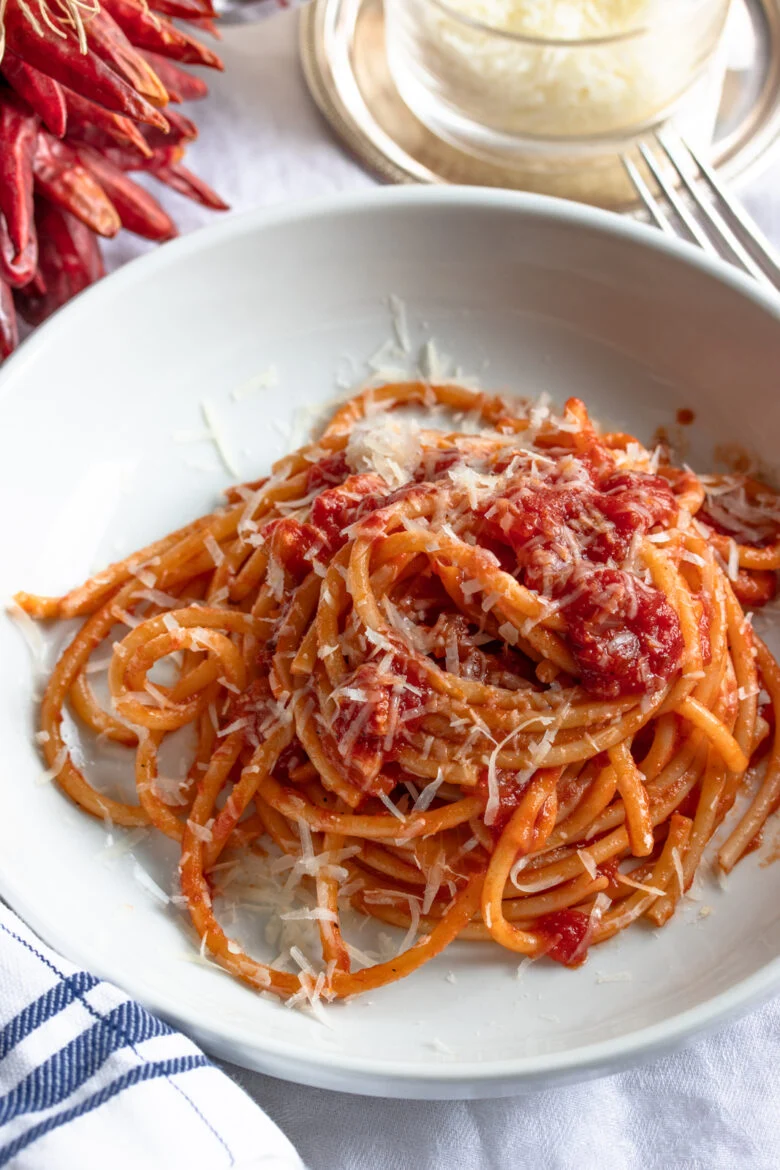
Amatrice is the name of a town in the Abruzzo region. People from that area have moved to Rome and settled there, and this recipe has become one of the city’s signature dishes.
Of course, with all traditions, people argue over who has the right to them.
There are as many versions of this recipe as there are Italian cookbooks. And of course, everyone claims that theirs is the original recipe. This is my version. I love this sauce for its simplicity and bold flavors.
Simple ingredients and super easy to prepare on a weeknight without compromising that amazing flavor. Just be careful not to set up your finest white tablecloth while you prepare this dish, as you will undoubtedly get sauce on it.
Half of the Italian-written cookbooks I have do use onions. The other half do not. I enjoy the sweetness of the onions and how rich they make the sauce.
Try onion, or no onion. Red wine or white wine. Just have fun with it and create your own version nd make it your favorite pasta dish.
In this Article
- Why you will love this recipe
- Let’s talk about heat.
- Do I have to use bucatini?
- Ingredients needed to make this recipe
- Equipment Needed
- Step-by-step instructions on how to make this delicious Amatriciana
- Giangi Pro Tips
- What dishes go well with this bucatini all’amatriciana?
- Variations and Substitutions
- Storing and Reheating
- If you enjoy this bucatini all’amatriciana recipe, you may want to try my other recipes.
- VIDEO: COOK ALONG WITH ME
- Bucatini All’ Amatriciana
Why you will love this recipe
This quick sauce is not only fast and easy, but it also keeps the intense tomato flavor, which balances well with the pork’s richness.
Pantry-ready ingredients. Even if you do not have all the ingredients on hand, easy substitutions can be made. Under the variations and substitutions portion of this post, I have listed a few ingredients you can use.
Great for a family dinner or a friend’s last-minute gathering.
Let’s talk about heat.
Amatriciana should be slightly spicy, and the debate has always been whether the heat comes from chili peppers or black pepper.
Chili peppers are the favorite here, as they add a spark, and you don’t use many; one will suffice to give your sauce a great kick.
On the other hand, you will need a lot of black pepper to achieve that kick of heat, which in turn will interfere with the taste of the onions and pancetta.
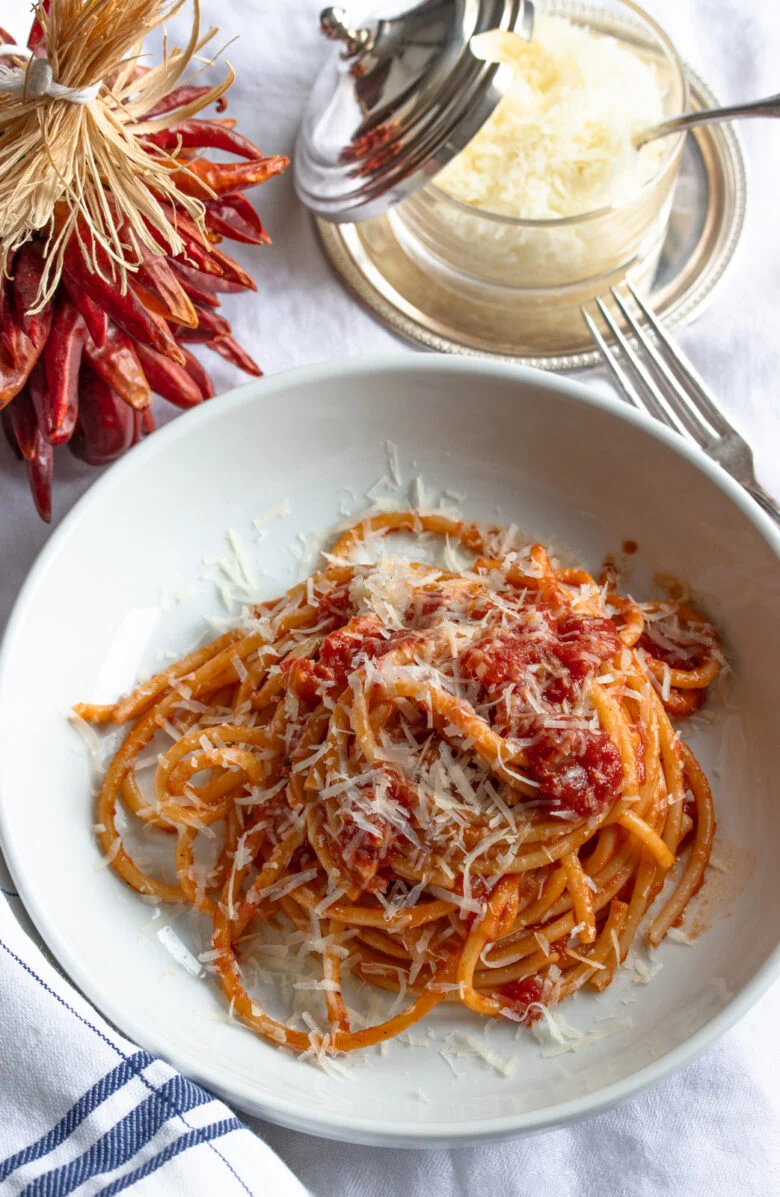
Do I have to use bucatini?
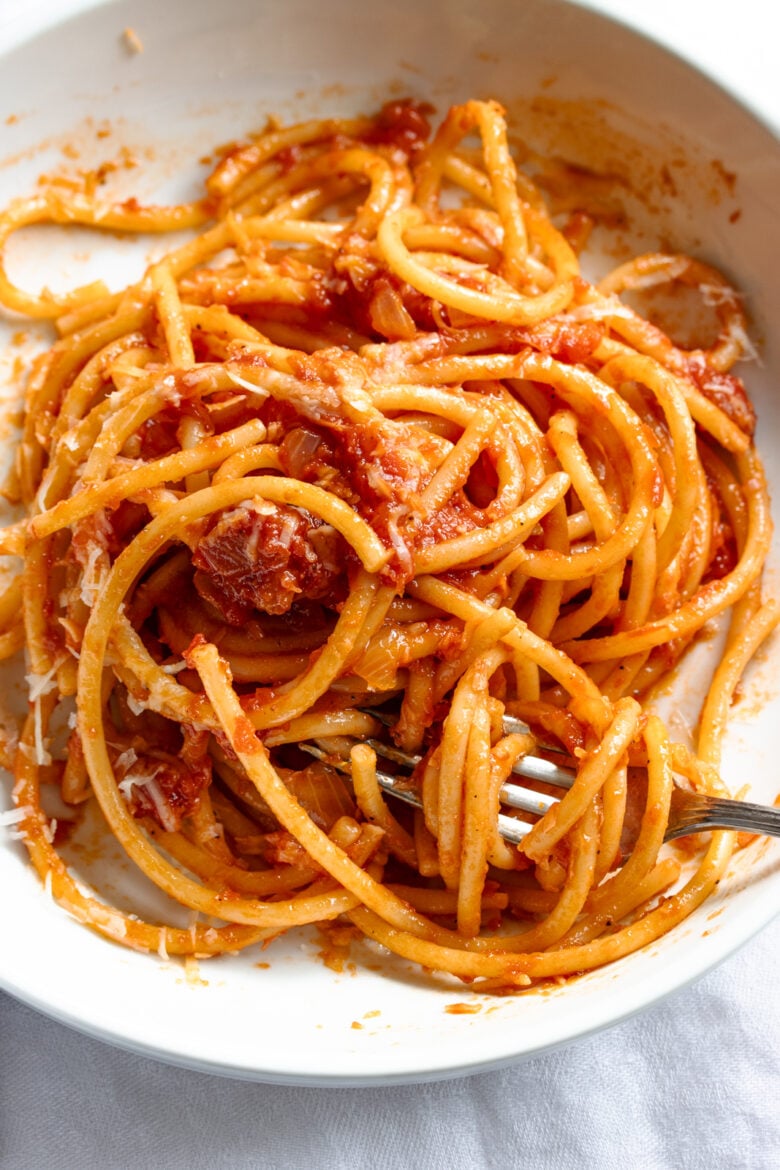
Bucatini, a very thick spaghetti-like pasta with a central hole, is a traditional but hard-to-eat dish. Unlike spaghetti, linguine, and other long pasta strands, it does not twirl neatly around the fork, especially when cooked al dente, as it is enjoyed throughout Italy.
Although bucatini is the classic noodle used in Amatriciana, spaghetti, penne, farfalle, rigatoni, and even orecchiette can be used to enjoy this dish.
Ingredients needed to make this recipe
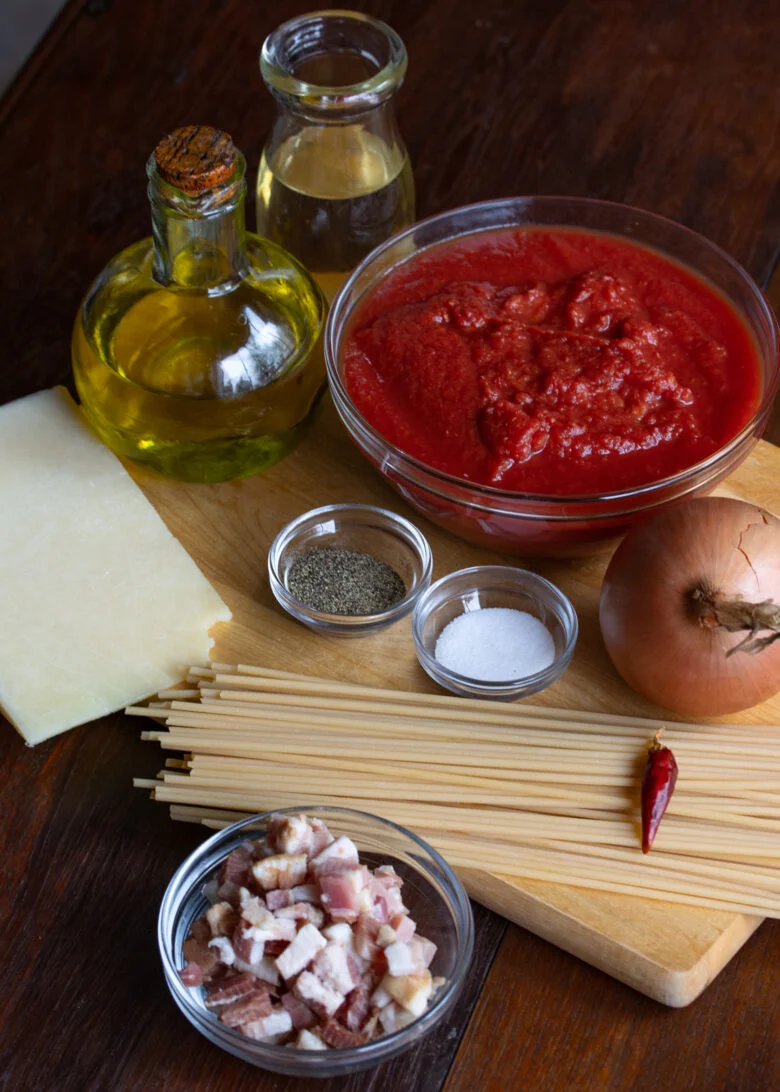
This is a short introduction. The ingredient list is also brief. It includes essential items that you may already have in your pantry. Please read the recipe for complete instructions.
Olive oil to cook your pancetta and onion. Use a mild olive oil
Pancetta or guanciale: Guanciale gives this Amatriciana its rich pork flavor and texture, though good pancetta works well if guanciale is not available.
Onion adds a sweet, aromatic flavor to the sauce without being overpowering. A small onion will work fine.
Chili pepper or red pepper flakes bring sharp heat, while the pepper adds a lighter kick to the sauce.
Dry white wine always adds a layer of flavor to all your dishes. This can be optional if you do not have wine on hand.
San Marzano Italian chopped tomatoes to create the tomato sauce. My preference is due to taste and the very low acidity. Peeled and whole tomatoes will work fine; crush them before cooking.
Salt and black pepper are the seasonings needed to create this amatriciana sauce.
Bucatini pasta or spaghetti if none are available.
Pecorino Romano cheese brings that strong flavor to this dish.
Equipment Needed
Please follow the link to access the product of your preference. I only suggest products that I use and love. Check out Giangi’s Favorite Kitchen Essentials, gadgets, and cookware!

It is incredible how welcoming a beautiful serving bowl is. Enjoy!
Step-by-step instructions on how to make this delicious Amatriciana
With all my recipes, please assemble all the ingredients before starting to cook and bake.
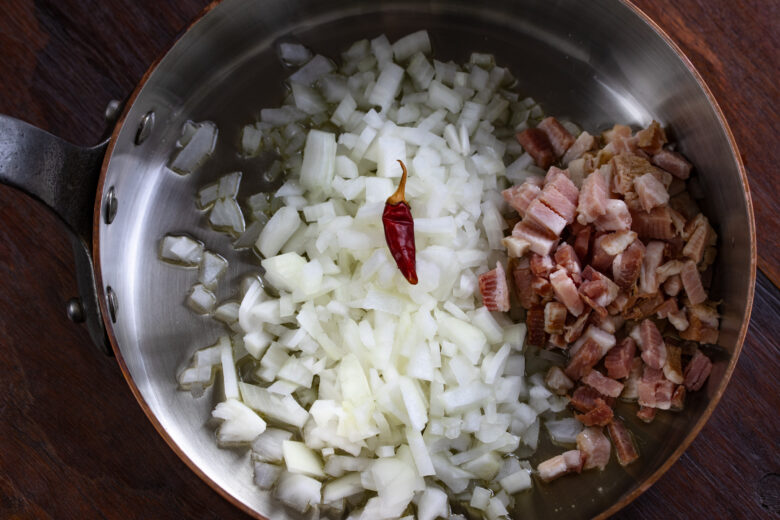
- In a large skillet over medium heat, heat the olive oil, add the pancetta, onions, and crushed red peppers, and cook until the pancetta and onions are golden. This will take about 12 minutes.
- Meanwhile, bring a large pot of salted water to a full boil and cook the pasta according to the manufacturer’s instructions, for al dente. Reserve a cup of cooking water and drain the pasta.
- Return the skillet to the heat, add the white wine, and simmer.
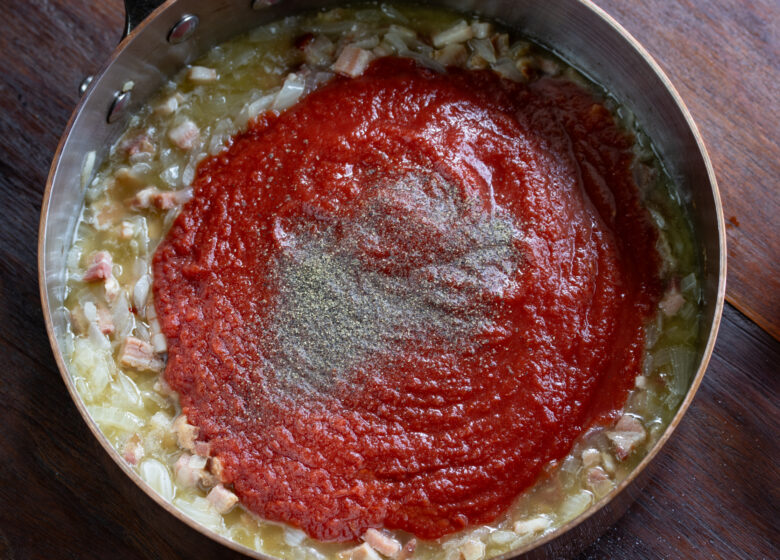
- Stir in the tomatoes, and season with salt and black pepper to taste. Bring the sauce to a simmer and cook, stirring occasionally, until it thickens and becomes richly flavored.
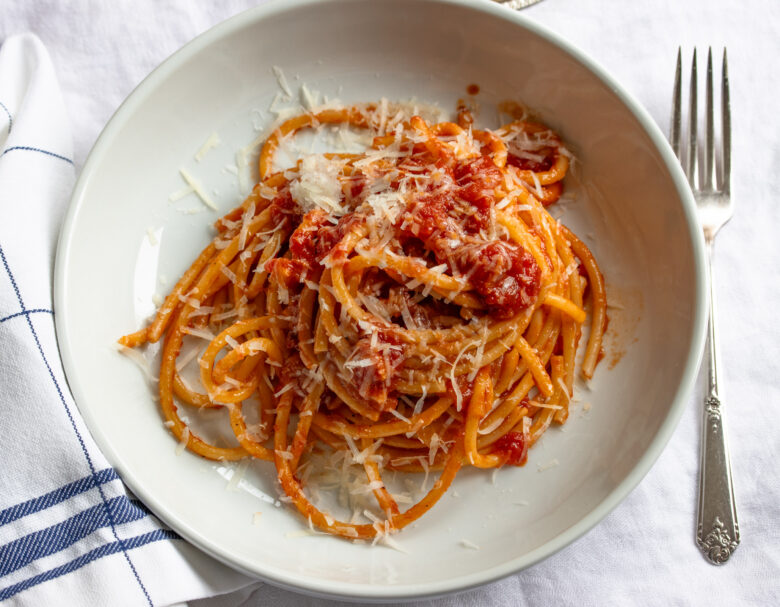
- Toss the cooked pasta into the tomato pasta sauce and cook for about 1 minute, or until the pasta is well blended and each strand is well coated. Add some of the cooking water if the pasta seems dry.
- Remove the pasta from the heat, add the grated cheese, and serve immediately.
Giangi Pro Tips
- The use of white wine, although it adds a great layer of flavor, is optional in this recipe.
- Peeled and whole tomatoes will work fine; crush them before cooking.
What dishes go well with this bucatini all’amatriciana?
Pasta in Italy is served as a first plate or “primo piatto”; therefore, it goes without saying that a small portion of veal saltimbocca, or creamy chicken piccata, is always a perfect dinner combination.
Dinner would not be complete without dessert, and zabaglione during the winter months is a must.
Variations and Substitutions
- If you cannot locate guanciale, you may use pancetta, thick-cut bacon, or prosciutto.
- Penne, orecchiette, linguine, spaghetti, and rigatoni can be other options for your pasta.
Storing and Reheating
Store: Place in an airtight container and refrigerate for up to 3 days.
Freeze: This pasta can be frozen in a freezer container up to two months. Thaw for one day in the fridge before reheating.
Reheating: Place the desired amount in a saucepan and heat over low heat until hot. Add a tablespoon of water to help thin the sauce.
If you enjoy this bucatini all’amatriciana recipe, you may want to try my other recipes.
VIDEO: COOK ALONG WITH ME
Bucatini All’ Amatriciana
Ingredients
- 2 tablespoons olive oil
- 3½ ounces pancetta, chopped into small bits
- 1 medium onion, finely chopped
- 1 whole dried chili pepper, chopped and seeds removed
- 28 ounces can San Marzano Italian Tomatoes, chopped
- ½ cup dry white wine
- salt and pepper, to taste
- 1 pound bucatini or spaghetti pasta
- ¾ cup pecorino Romano cheese, freshly grated
Instructions
- Pour the olive oil into a large skillet that can hold the cooked pasta. Add the pancetta, onion, and crushed red pepper. Cook, stirring occasionally over medium heat, until the pancetta and onion are golden, about 12 minutes.
- Add the wine and bring to a simmer.
- Stir in the tomatoes, add salt and pepper to taste. Bring the sauce to a simmer and cook, stirring occasionally, until it thickens and tastes very rich.
- Cook the pasta in salted boiling water, stirring often until al dente, soft, yet firm to the bite. Reserve a cup of the cooking water and drain the pasta in a colander.
- Toss the pasta with the sauce over medium-low heat for about 1 minute or until the pasta is coated. Add a little of the cooking water if the pasta seems dry.
- Remove from the heat, and add the cheese.
Notes
- Store: Place in an airtight container and refrigerate for up to 3 days.
- Freeze: This pasta can be frozen in a freezer container for up to two months. Thaw for one day in the fridge before reheating.
- Reheating: Place the desired amount in a saucepan and heat over low heat until hot. Add a tablespoon of water to help thin the sauce.
- The use of white wine, although it adds a great layer of flavor, is optional in this recipe.
- Peeled and whole tomatoes will work fine; crush them before cooking.
Nutrition
Giangi’s Kitchen provides nutritional information, but these figures should be considered estimates, as a registered dietician does not calculate them.
- Course: Pasta, Rice & Grains, Dinners
- Cuisine: Italian
- Type: Affordable Gourmet, Under 45 minutes, Videos
Did you make this?
Leave a comment below and tag @giangiskitchen on Instagram
Visit my Amazon Storefront for my selection of favorite kitchen essentials. I only recommend equipment that I use and love.