
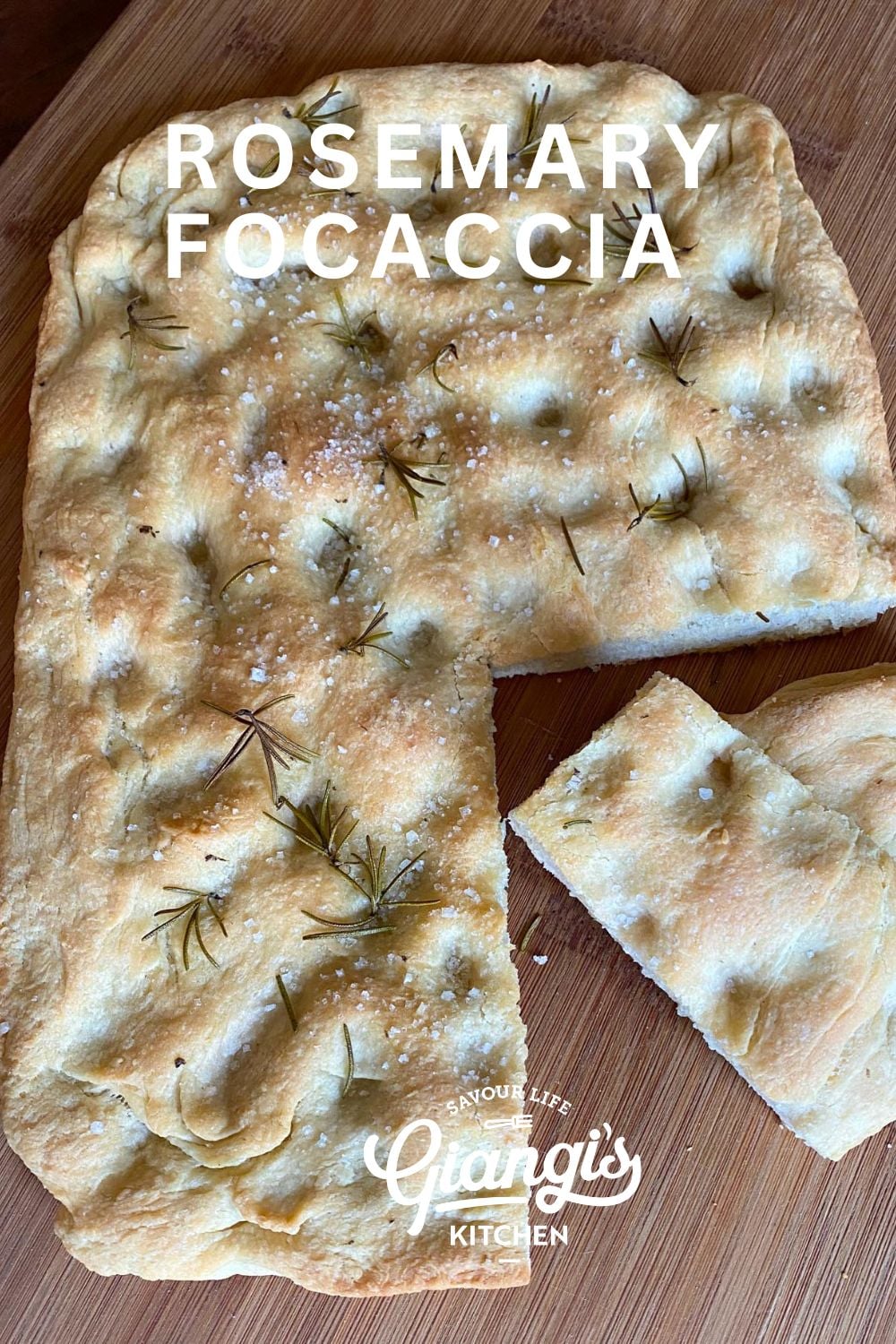
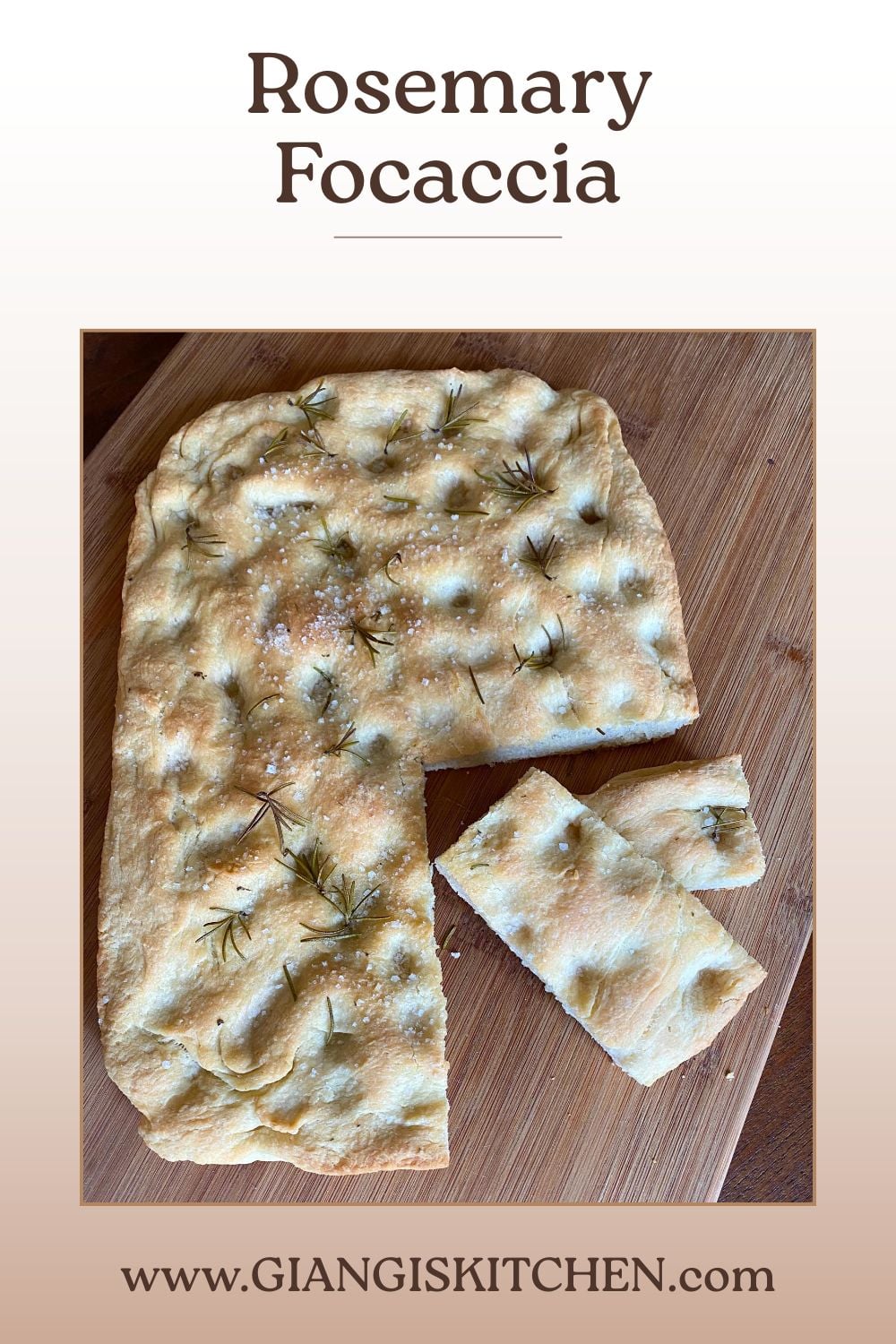
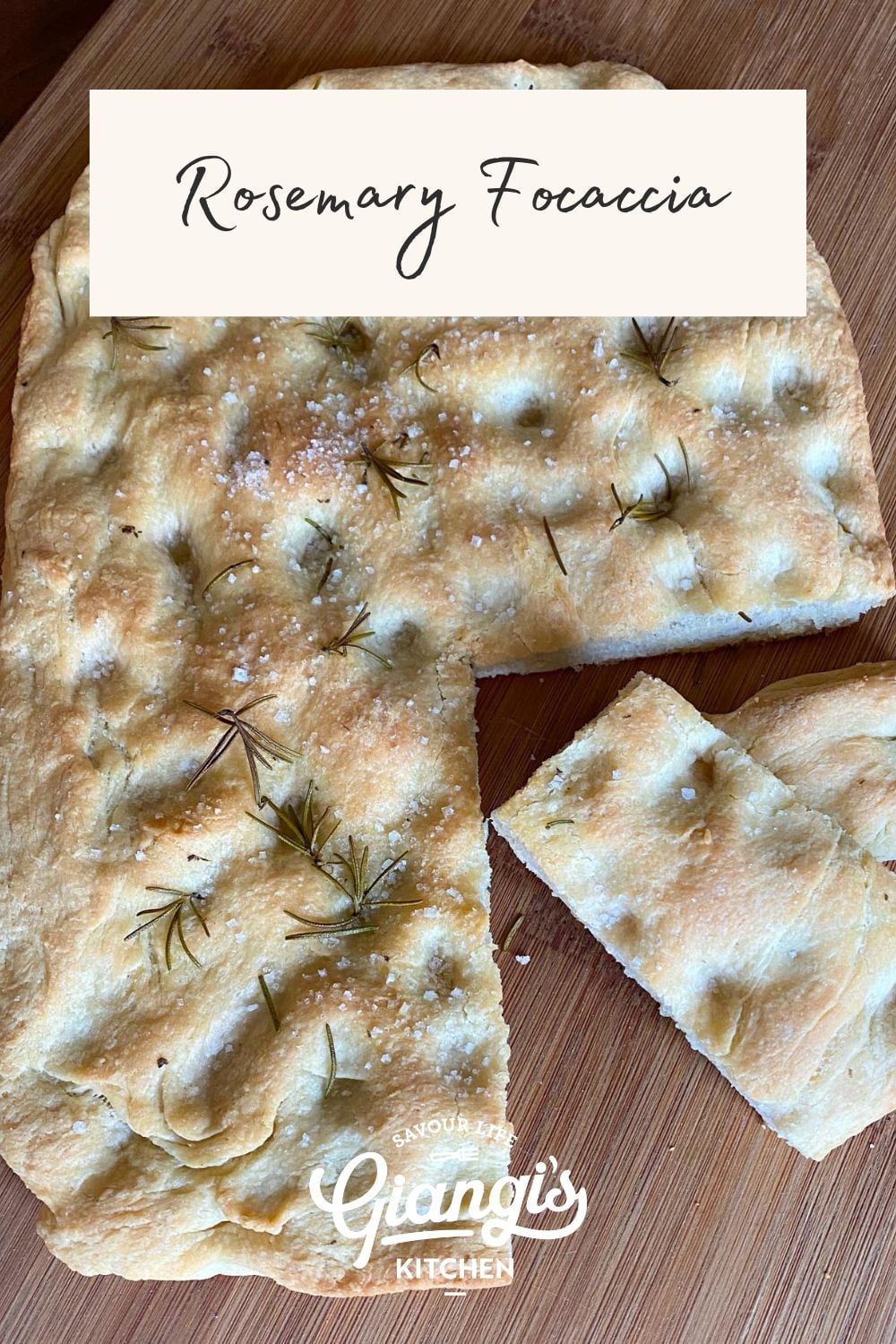
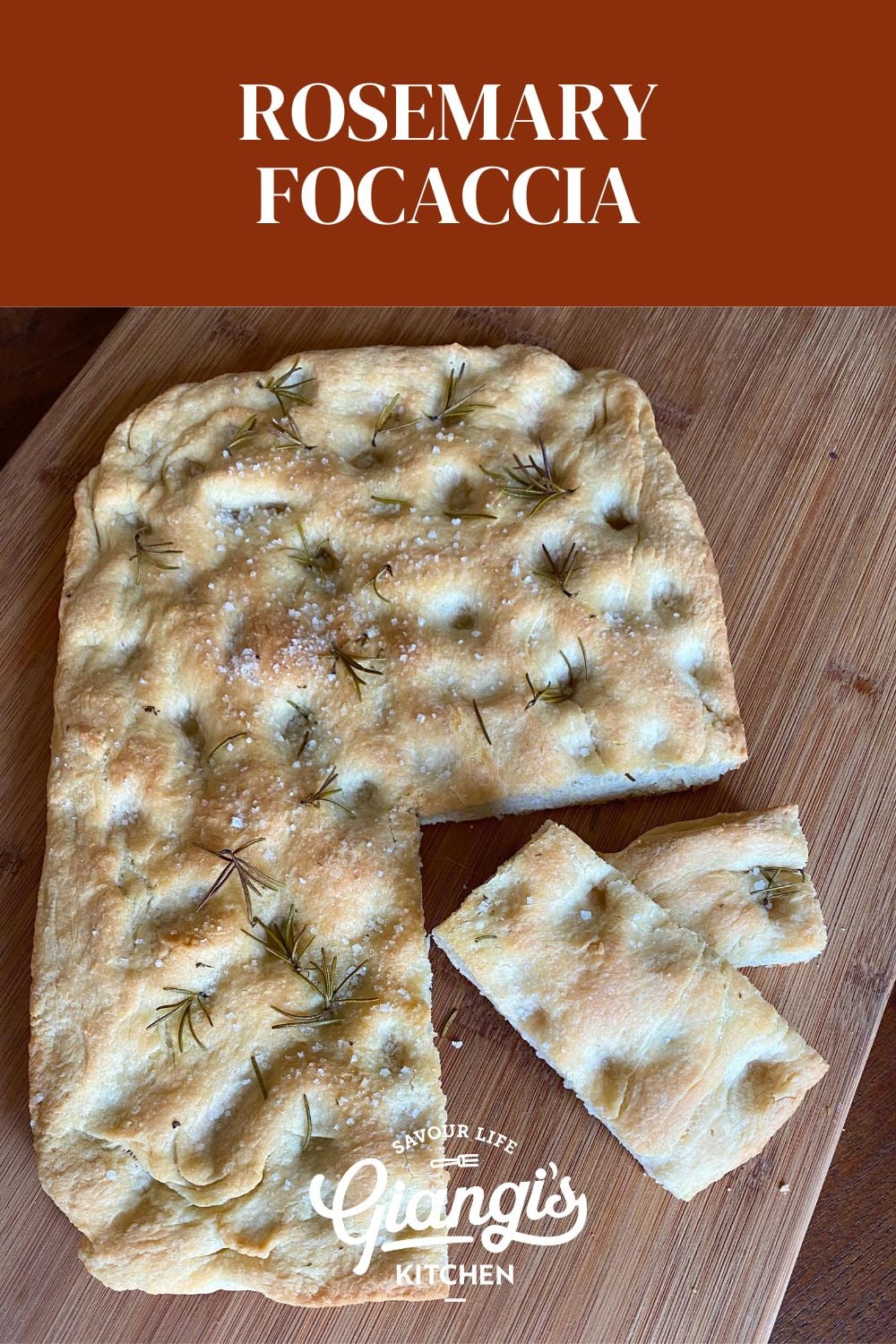
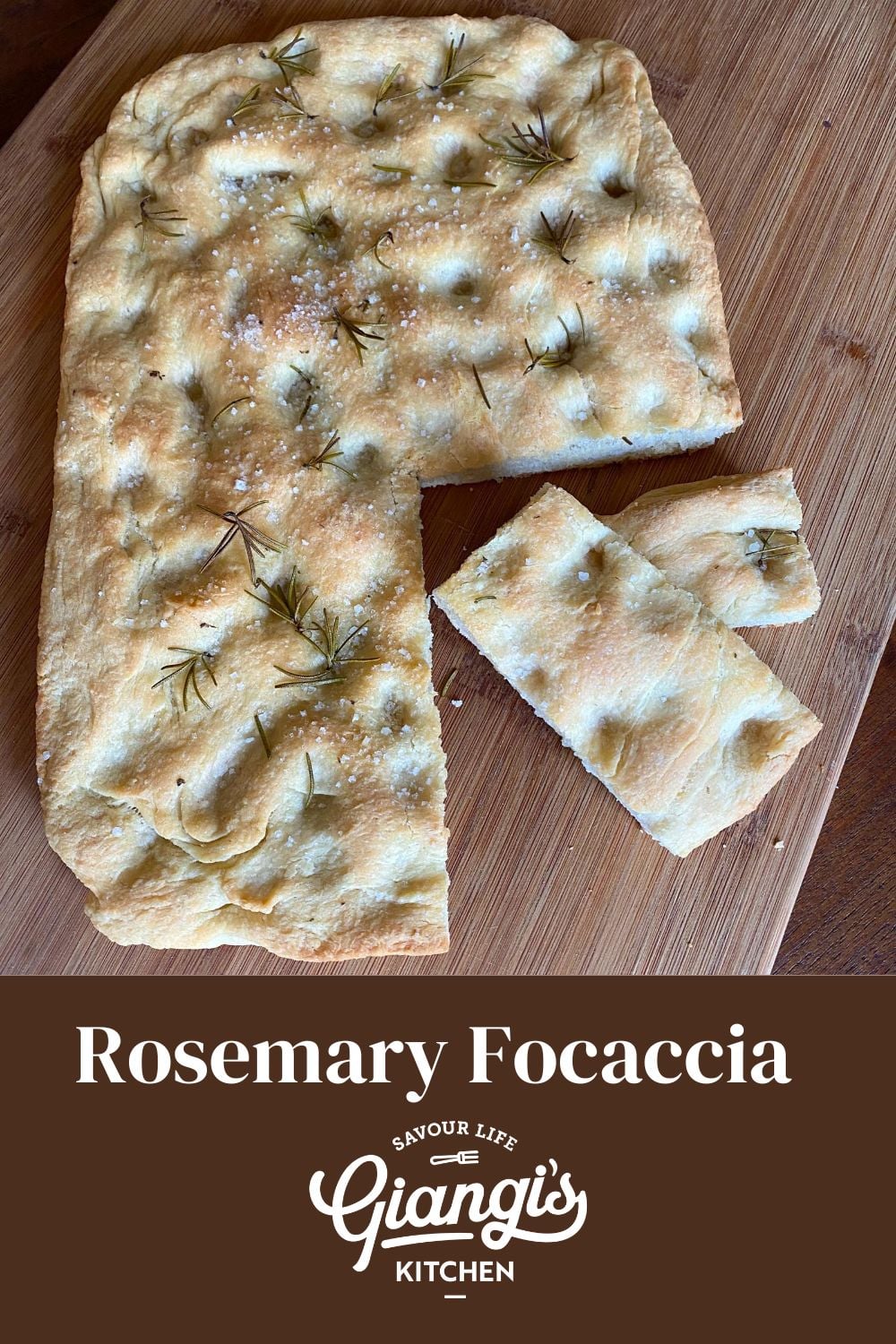
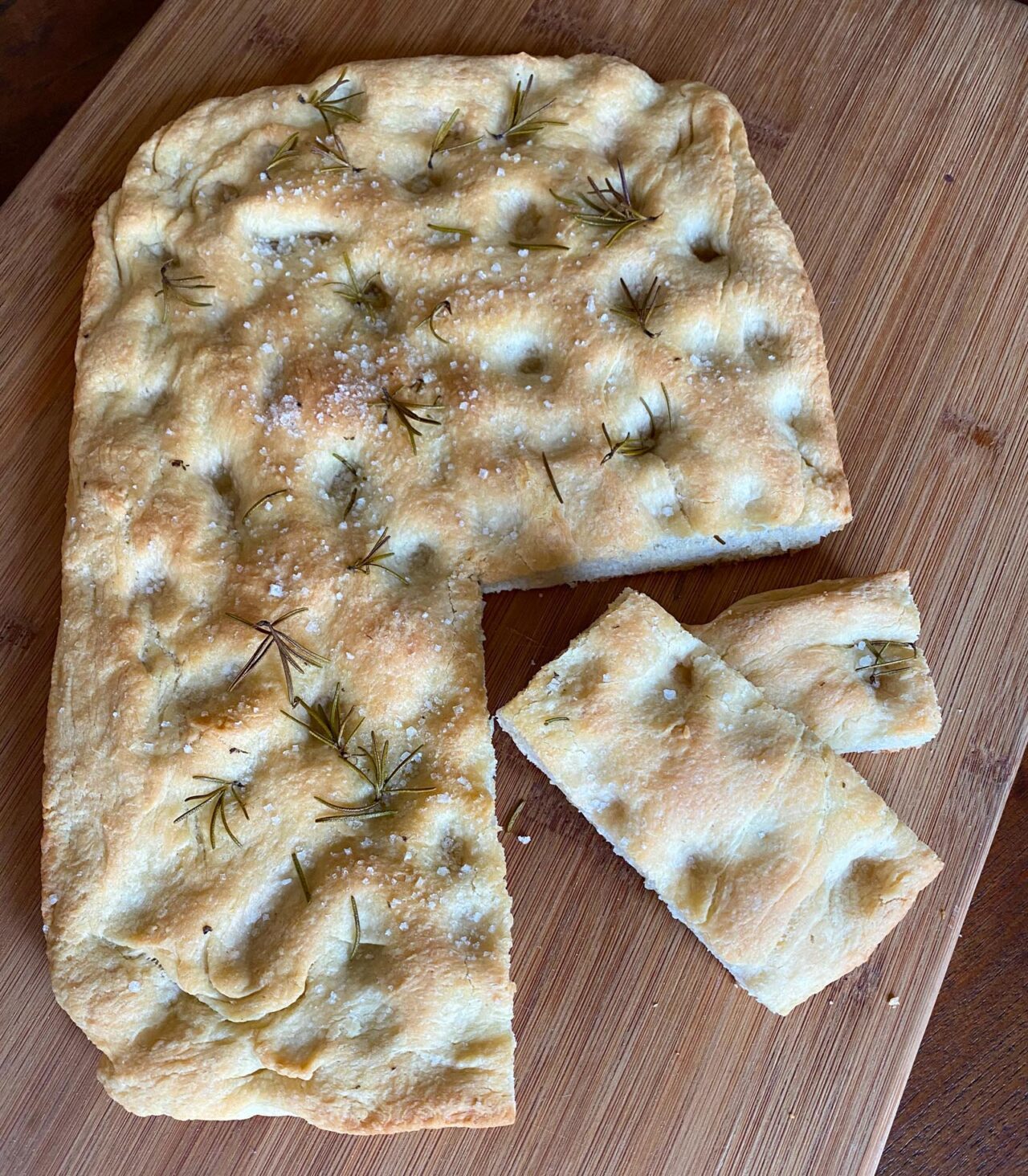
There is nothing quite like the smell of freshly baked rosemary focaccia coming out of the oven. Golden and slightly crisp on the outside, soft and airy on the inside, and infused with olive oil, fresh rosemary, and sea salt. Pure heaven!
I have wanted to make homemade focaccia forever, but the waiting time always discouraged me. As it turns out, making it is surprisingly easy. The dough requires very little hands-on work; you just need a little patience while it rises. If you are searching for more bread recipes, check out Herb Bread or Banana Bread with Cranberries and Chocolate.
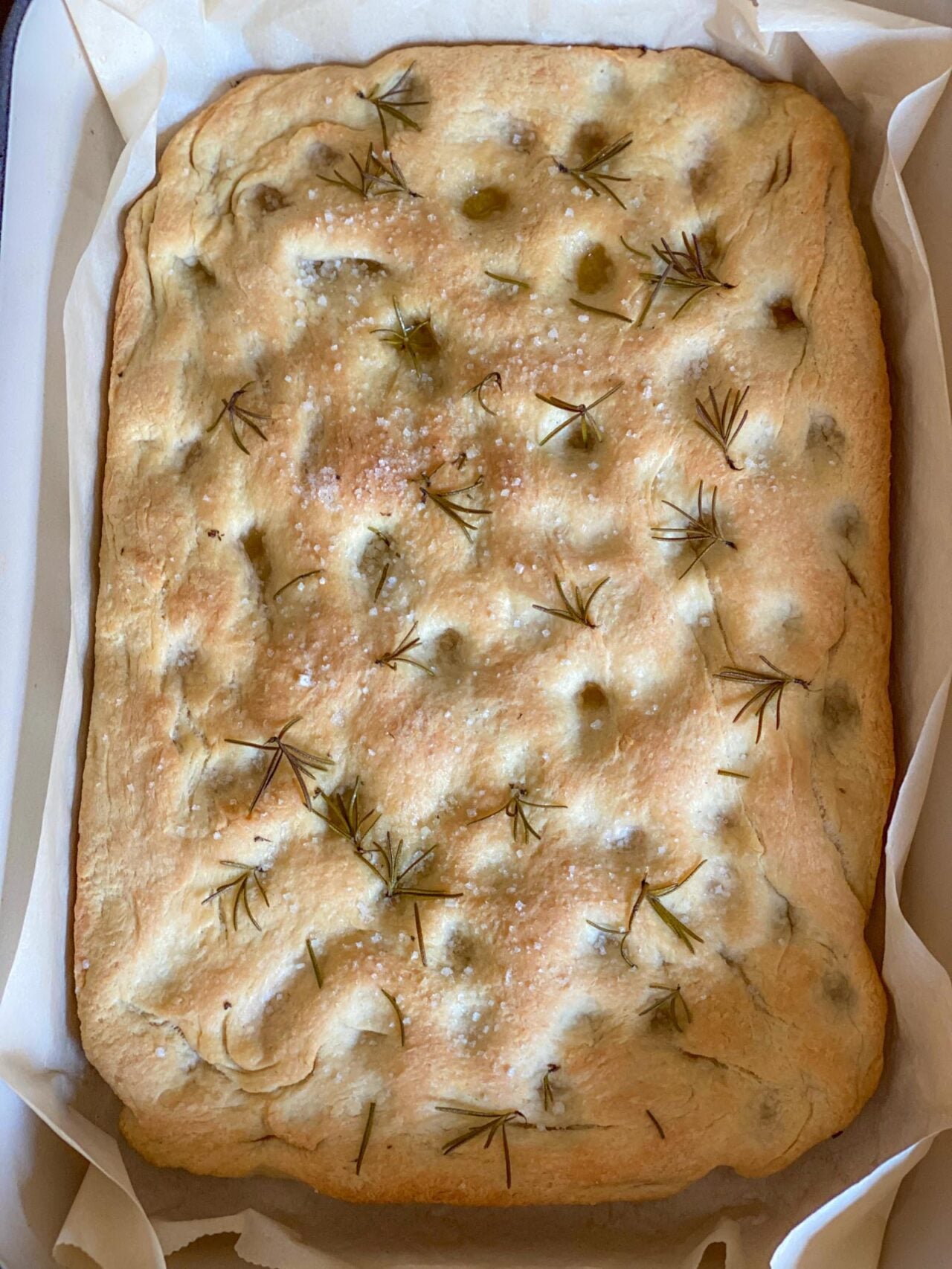
Recipe Overview: Rosemary Focaccia
- Prep Time: 10 minutes
- Cook Time: 25 to 30 minutes
- Resting Time: 1 hour 30 minutes
- Total Time: 2 hours 10 minutes
- Servings: 6 people
- Cook Method: Oven-baked on a baking sheet
- Flavor & Texture: Golden and slightly crisp on the outside, soft and tender on the inside, with fragrant rosemary, rich olive oil, and a delicious touch of flaky sea salt.
- Difficulty: Easy. A simple homemade bread that requires just a few ingredients, minimal kneading, and a little patience while the dough rises.
- Why this Recipe? There is nothing quite like freshly baked Italian focaccia! With its golden crust, soft center, and irresistible combination of rosemary, olive oil, and sea salt, this homemade bread is worth every minute of waiting. Perfect alongside dinner, for sandwiches, or simply enjoyed warm from the oven. And the best part? It is so much easier to make than you think!
And I must admit, I loved working the dough with my hands. There is something so satisfying about it.
This delicious Italian bread is perfect alongside dinner, dipped in olive oil, or enjoyed warm straight out of the oven. I am already thinking about making another batch this weekend!
In this Article
- Recipe Overview: Rosemary Focaccia
- What is the difference between focaccia and pizza?
- A Note From Giangi
- Key Ingredients
- Variations and Substitutions
- How to Make Rosemary Focaccia
- Giangi’s Pro Tips
- What to Serve with Rosemary Focaccia
- Storage and Reheating
- Rosemary Focaccia FAQs
- More Rosemary Recipes You Will Love
- Rosemary Focaccia
What is the difference between focaccia and pizza?
Focaccia and pizza may look similar, but they have different textures and uses.
Focaccia is generally thicker, softer, and generously coated with olive oil. The characteristic little dimples hold the olive oil, herbs, and sea salt, creating a beautifully flavorful crust.
Pizza dough is usually stretched thinner and designed to support toppings such as tomato sauce, cheese, and vegetables.
Growing up with Italian food, I have always loved pizza bianca, especially the wonderful versions found in Rome. Simple bread, olive oil, and a generous sprinkle of sea salt. Sometimes the simplest things are the most delicious!
A Note From Giangi


Key Ingredients
You only need a few simple ingredients to make this delicious Italian bread. The magic is in the olive oil, rosemary, and a little patience.
Flour: Italian 00 flour gives the bread a lovely, tender texture. Bread flour is also an excellent choice, while all-purpose flour works well if that is what you have available.
Active dry yeast: Helps the dough rise and creates its light texture. Make sure your yeast is fresh for the best results.
Sea salt: Essential for bringing out the flavor of the bread. You will also need flaky sea salt for that wonderful finishing touch.
Lukewarm water: Helps hydrate the flour and activate the yeast. The water should feel comfortably warm, never hot.
Olive oil: One of the most important ingredients in focaccia. It adds richness, flavor, and helps create that beautiful golden crust. I prefer a good-quality extra virgin olive oil.
Fresh rosemary: Gives focaccia its unmistakable aroma and earthy flavor. Fresh rosemary is my favorite here, especially when it bakes into the olive oil.
Variations and Substitutions
Try different herbs. Fresh thyme or oregano is a delicious alternative to rosemary. You can also combine them for a more aromatic focaccia.
Add roasted garlic. A few cloves of roasted garlic, gently pressed into the dough before baking, add a wonderfully sweet, savory flavor.
Make it with tomatoes. Press a few halved cherry tomatoes into the dough for a colorful Mediterranean-inspired variation.
Change the flour. Bread flour gives the focaccia a chewier texture, while all-purpose flour is a convenient alternative to Italian 00 flour. You may need to adjust the water slightly depending on the flour used.
I love the simplicity of rosemary and sea salt, but focaccia is one of those wonderful breads you can make yourself.
How to Make Rosemary Focaccia
Making homemade rosemary focaccia is easier than you think. With a little patience and a few simple ingredients, you will have a beautifully golden bread with a soft center and wonderful rosemary flavor.
Step 1: In a large mixing bowl, combine the flour, yeast, and salt. Slowly add the lukewarm water and olive oil, mixing until a soft dough forms.
Step 2: Transfer the dough to a lightly floured surface and knead for 4 to 6 minutes, until smooth and elastic. Avoid adding too much flour, as you want your focaccia to remain soft and tender.
Step 3: Place the dough in a lightly oiled bowl and cover with a clean kitchen towel. Let it rise in a warm, draft-free place for about one hour, or until doubled in size.
Step 4: Transfer the dough to a generously oiled baking sheet. Gently stretch it into a rectangle using your fingertips. Cover and let it rise again for approximately 30 minutes, until puffy.
Step 5: Preheat your oven to 400°F. Using your fingertips, gently press dimples all over the dough. Drizzle generously with olive oil, sprinkle with fresh rosemary, and finish with flaky sea salt.
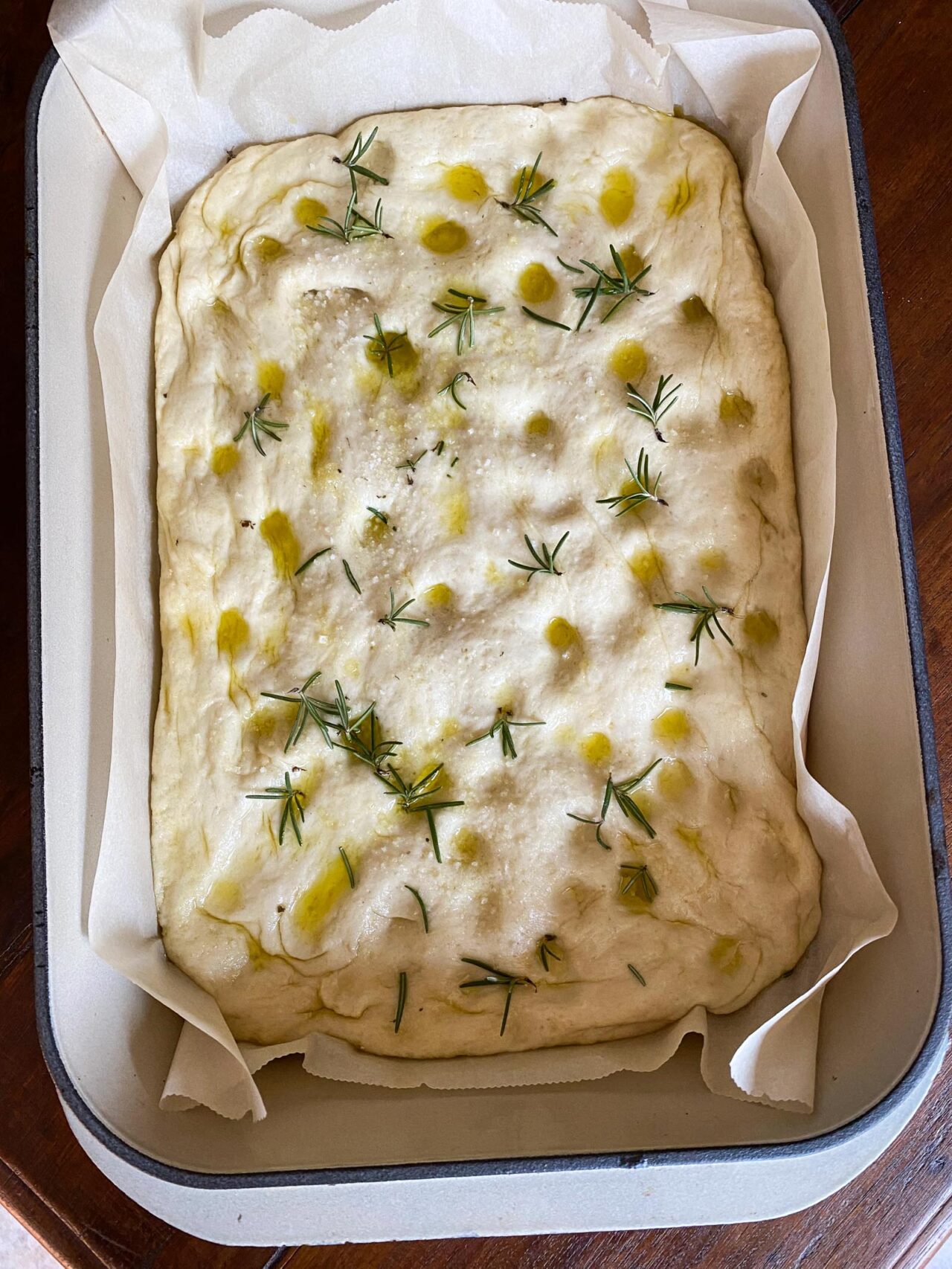
Step 6: Bake for 25 to 30 minutes, or until the focaccia is beautifully golden brown and cooked through.
Step 7: Remove from the oven and transfer to a wire rack. Let it cool slightly before slicing. Enjoy warm with a little extra olive oil for dipping.
The hardest part? Resisting the temptation to cut into it the moment it comes out of the oven!
Giangi’s Pro Tips
Use fresh yeast. Nothing is more disappointing than waiting for bread that never rises. Check your yeast’s expiration date before getting started.
Give your dough time to rise. A warm, draft-free kitchen is ideal. If your kitchen is cold, the dough may need a little extra time. Patience is the secret to beautiful homemade bread.
Do not add too much flour. A soft dough makes a more tender focaccia. Add only enough flour while kneading to keep it manageable.
Use your fingertips. I love this part! Gently press your fingers into the dough to create those wonderful little pockets that catch the olive oil and rosemary.
Be generous with the olive oil. Good-quality olive oil makes all the difference. It gives your focaccia that irresistible flavor and golden crust.
Do not forget the flaky sea salt. Those little bursts of salt are one of my favorite parts of focaccia. They make every bite delicious.
What to Serve with Rosemary Focaccia
Freshly baked rosemary focaccia is delicious on its own, especially while still warm from the oven. But it is also wonderful alongside some of your favorite meals.
With soup: Nothing beats dipping a warm piece of focaccia into a comforting bowl of homemade tomato soup. The rosemary and olive oil pair beautifully with the rich tomato flavor.
With a simple salad: Serve alongside your favorite green salad for a lovely light lunch. A little bread, a beautiful salad, and lunch is ready!
As an appetizer: Cut into small squares and serve with good-quality olive oil for dipping. Simple, elegant, and always a favorite when entertaining.
For sandwiches: Slice your focaccia horizontally and fill it with mozzarella, tomatoes, and fresh basil. Absolutely delicious!
Storage and Reheating
Room temperature: Store cooled focaccia in an airtight container or well-wrapped at room temperature for up to 2 days.
Freezing: Wrap individual pieces tightly and freeze for up to 2 months. Perfect when you want homemade bread without starting from scratch.
Reheating: Warm in a 350°F oven for 5 to 10 minutes, or until heated through. This helps bring back that lovely crust.
I prefer enjoying focaccia fresh, but a few minutes in the oven make leftovers delicious again.
Rosemary Focaccia FAQs
Why didn’t my focaccia rise?
Your yeast may have expired, the water may have been too hot, or the dough may not have had enough time to rise. Make sure your yeast is fresh and give the dough a warm, draft-free place to rest.
Can I make rosemary focaccia ahead of time?
Absolutely! You can prepare the dough ahead and refrigerate it, covered, for a slow overnight rise. Allow it to warm up and become puffy before baking. The timing will differ from the original recipe.
Can I use dried rosemary instead of fresh?
Yes. Dried rosemary has a more concentrated flavor, so use less than you would fresh. I recommend crushing it slightly before adding it to the dough.
Why is my focaccia dense instead of fluffy?
Dense focaccia can result from dough that is too dry, insufficient rising time, or inactive yeast. Make sure your dough has risen properly before baking.
Can I freeze homemade focaccia?
Yes! Allow it to cool completely, cut it into portions, and freeze in an airtight container or freezer-safe bag. Reheat in the oven for the best texture.
More Rosemary Recipes You Will Love


If you tried this Rosemary Focaccia or any other recipe on my blog, please leave a 🌟 star rating and let me know how it goes in the 📝 comments below.
Rosemary Focaccia

Ingredients
- 3 cups "00" white flour
- ¼ ounces active dry yeast packet
- 1½ teaspoons sea salt
- 1 cup lukewarm water
- 3 tablespoons olive oil
- rosemary sprigs
- sea salt flakes
Instructions
- Put the flour into a mixing bowl, then sprinkle the yeast on one side of the bowl and the measured sea salt on the other side. (The two cannot touch at this stage as they will counter each other, and your dough will not rise.) Cover each with a little flour. Make a well in the middle and add warm water and oil. Mix well with a table knife to incorporate the dough.
- Transfer to a clean surface and knead until smooth. This will take around 4-6 minutes. Dust some flour to the board to eliminate sticking to it.
- Brush the surface of the dough with a little olive oil and placed on a clean oiled bowl. Cover with saran wrap and let it rise in a warm place until it doubles in size, about 1 hour.
- Grease a large baking tray. Scoop gently the dough from the bowl and place it onto the prepared baking tray. Flatten gently the dough to shape into a rectangle and spray or brush lightly with morn size.
- Cover with saran wrap, as before, and leave in a warm place for 30 minutes or until doubled in size.
- Preheat the oven to 400F.
- Slightly press the surface with your fingers to create small pockets. Sprinkle with fresh rosemary, abundant sea salt flakes. Drizzle with more olive oil.
- Bake for 25 to 30 minutes, or until golden brown and cooked through. Transfer to a wire rack and leave to cool down slightly. Slice and serve warm.
Notes
Nutrition
Giangi’s Kitchen provides nutritional information, but these figures should be considered estimates, as a registered dietician does not calculate them.
- Course: Appetizers
- Cuisine: Italian
Did you make this?
Leave a comment below and tag @giangiskitchen on Instagram



Art
I love this. It is so good. Thank you for sharing.
Giangi Townsend
You are most welcome. Bon Appetit!
Giangi Townsend
I grew up eating focaccia, and it is one of my favorites. Perfect any time of the week 🙂
Johnny Moya
1 cup water to 5 cups flour ?? is this a typo ??
Giangi Townsend
Hi Johnny, yes, that was a typo and it should be 3 cups. Thank you for bringinig it to my attentions and now the recipe reflects the correct amount of flour, 3 cups.
Enjoy!